Cedar shakes cupping and splitting
A cedar shake that cups at the edges or splits down the middle has stayed wet too long, and the wood is starting to fail. Cupped shakes let wind-driven rain straight under the course above them.
Canandaigua Lake Roofing
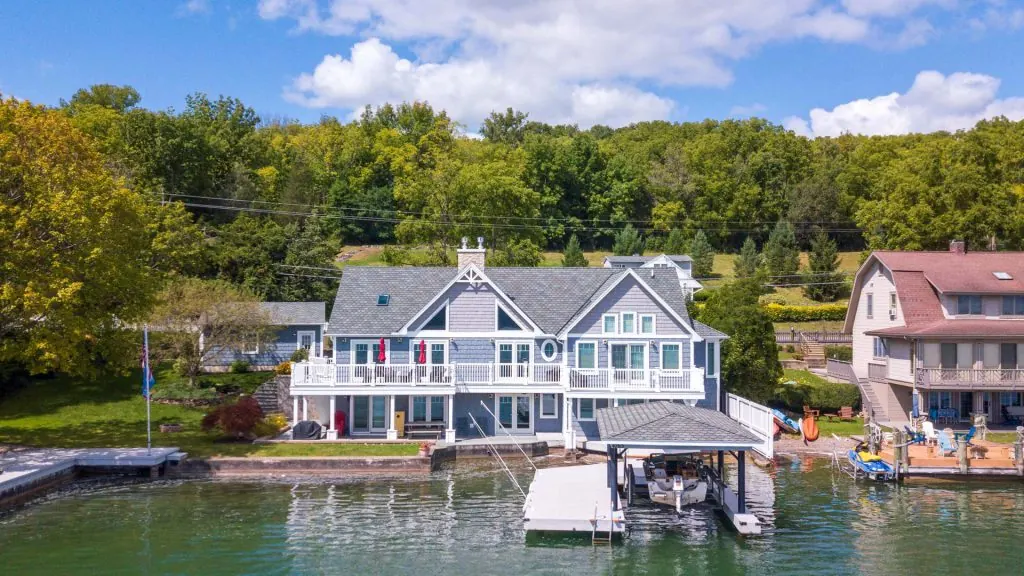
Canandaigua is the city at the north end of Canandaigua Lake, and the roofs here run from the lakefront homes on the shore to the Victorians on Main Street and the colonials along Routes 5 and 20. Sonnenberg Gardens sits on the hill above the lake, Kershaw Park lines the shore, and the downtown streets hold some of the oldest homes in Ontario County. The lake gives Canandaigua its views and its weather, and the roofs here take wind off the water, snow off the bands, and damp off the lake all year. We work on Canandaigua roofs one at a time, and we read each one up close.
Canandaigua, NY
Canandaigua sits where Routes 5 and 20 meet the north end of Canandaigua Lake, and the city has been the county seat of Ontario County since the early days of the state. Main Street runs north from the lake through the downtown, and the streets on either side hold Victorians, colonials, and Capes from across two centuries. The lakefront homes on the shore are newer and larger, with multi-slope roofs and long valleys, and the neighborhoods toward the Routes 5 and 20 corridor hold the ranches and split-levels of the post-war build-out.
The wind off Canandaigua Lake hits the shore homes with nothing to break it, and the lake-effect bands pile snow deep on the low slopes. Damp air off the water keeps the north-facing slopes slow to dry. Roof repair is a steady job here, because a lakefront roof has more joints, more valleys, and more skylights than a simple ranch, and the state site keeps the lake parks and the shore paths open to the public, so the lakefront roofs are on view from the water all summer.
The Main Street Victorians need their chimneys watched, because the flashing around a tall brick chimney takes the lake wind from every direction. Chimney work in Canandaigua resets the flashing and the cap where the brick meets the roof, and a roof inspection after a storm checks the chimney joint before the stain shows up inside.
Cedar and lake air
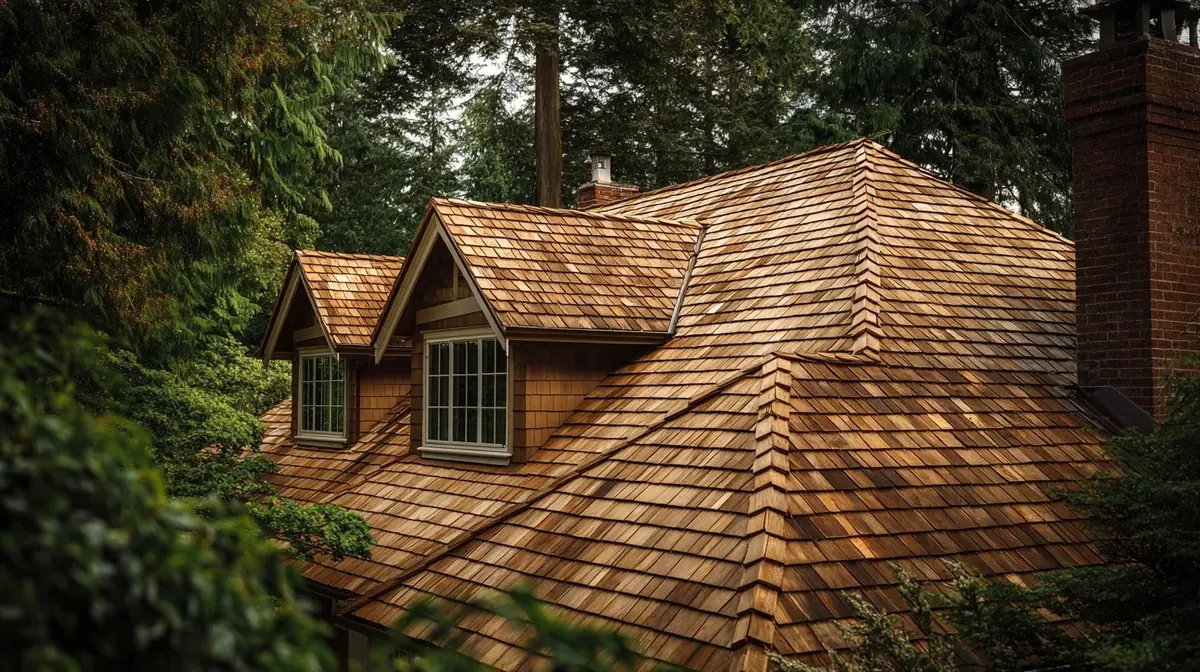
Cedar shake shows up on the lakefront homes and on the older houses near Sonnenberg Gardens, and it is a roof that asks for air. Shake needs to dry between rains, and the lake air keeps the shaded slopes damp long after a storm passes. Moss takes hold where the sun never reaches, and the moss holds moisture against the wood until the shakes start to cup and split. A cedar roof on an open, sunny lot can last for decades, and the same roof on a shaded lakefront lot can fail in half the time.
The fix for a cedar roof is part roof work and part tree work: clear the valley, keep the gutters open, and let a little more light reach the slope. Composite roofing is the material many lakefront owners choose when the cedar finally gives out, because it holds the look of wood without the damp trouble, and it sheds snow the way the lakefront roofs need it to. We keep the original cedar where it is sound and change only what has failed, and we say plainly when the shaded lot has beaten the material.
Cedar shakes cupping on a shaded lot, or a stain under a valley? Call and the valley is where we begin.
Call (585) 868-0065
Reading the stain
A water stain on a Canandaigua ceiling usually shows up far from the leak that made it, because water runs along the deck and the rafters before it finds a seam to drip through. A stain by an outside wall points to the eave, where a clogged gutter or an ice dam let water under the shingle edge, and a stain in the middle of a room points to a valley or a chimney joint. The ceiling is the messenger, not the problem, and the roof gets the first look.
The stain also tells how long the leak has been running, because a fresh stain is pale and a stain that has been there for months is dark at the edges and soft to the touch. A dark stain means the deck below has been wet for a while, and the crew looks at the deck boards as well as the shingles when the roof comes off. The sooner the stain is traced back to the roof, the smaller the repair, and the ceiling itself is usually the last thing to fix.
Warning signs
A cedar shake that cups at the edges or splits down the middle has stayed wet too long, and the wood is starting to fail. Cupped shakes let wind-driven rain straight under the course above them.
A stain that sits under a valley usually starts in the valley itself, where leaves hold moisture against the metal and the seams work open a little each year. The leak rarely starts above the stain.
A few granules after a storm are normal wear, but a steady pile at every downspout means the shingles are wearing thin across whole slopes, and the asphalt beneath is starting to show.
Compare
| Roof option | The home it was made for | Lake weather to watch for |
|---|---|---|
| Architectural shingles for Main Street Victorians | Victorians and colonials on Main Street | Hail bruises the older shingles first, and the bruise hides beneath moss on shaded slopes |
| Composite roofing for lakefront homes | Lakefront houses that want the look of wood | The lake damp still feeds moss, so the valleys need clearing each fall |
| Standing seam metal for shore homes | Shore houses that take the lake wind head-on | Snow slides off fast, so the shrubs below the eave need a plan |
| Cedar shake for sunny open lots | Open, sunny lots away from the lake damp | Cedar needs sun and air to dry, and a shaded lot will beat it in half the time |
Corners of town
Canandaigua runs from the lake shore to the Routes 5 and 20 corridor and up the hill toward Sonnenberg, and the roof on each street faces different wear.
Lakefront houses on the shore, where the wind hits straight off the water and the north slopes wear first.
Victorians and colonials on the downtown streets, where steep pitches and dormers need careful step flashing at every joint.
Homes near the park on the lake, where shore trees shade the roofs and drop a heavy load of leaves each fall.
Ranches and split-levels along the corridor, where traffic and lake weather meet on the same roofs.
Homes on the hill above the lake near the gardens, where big lots open to the fields and the wind runs unbroken across the open ground.
Homes on the south side of town toward the fields, where open lots face the weather first.
Coverage
Canandaigua is a city in Ontario County, at the north end of Canandaigua Lake, with Main Street running north from the shore.
The 14424 ZIP covers the lakefront, Main Street, the Routes 5 and 20 corridor, and the neighborhoods toward Sonnenberg.
FAQ
It depends on the lot. Cedar needs sun and air to dry between rains, and a shaded lakefront lot gives it neither, so the shakes cup and split years before they should. An open, sunny lot suits cedar well, and the roof can last for decades there.
A valley carries water from two slopes at once, so it takes twice the flow and twice the wear of any other part of the roof. Leaves settle in the valley and hold damp against the metal, and each winter's freeze and thaw works the seams a little wider.
They need a roof picked for wind first. Lakefront houses sit in the open path of the lake wind, so the ridge caps, the rake edges, and the flashing around the chimney take the hardest wear. A heavier architectural shingle or a standing seam metal roof stands up better there than a thin shingle, and the fasteners and the underlayment count as much as the shingle itself.
The metal around the roof gives out first. A Victorian carries more dormers, more wall joints, and more chimney flashing than a ranch, and every joint is a way in for water. Step flashing at the dormers and counterflashing at the chimney both ease away from the brick and the siding a little every year.
Start at the gutters. Granules piling at the downspouts mean the shingle surface is thinning across whole slopes, and that points to replacement. A single leak at a valley or a pipe boot points to a repair, because the trouble sits in one place. When granule loss, curling, and leaks all turn up together, the roof is telling you the whole field has worn out at once.
Late spring through early fall gives the shingles the warmth they need to seal, and the lake is at its calmest then too. Winter work is possible when a leak forces the issue, but the shingles seal slowly in the cold and the crew has to work around the snow load. If the roof can hold until the thaw, the work goes quicker and the seal sets harder.
The lakefront
The lakefront at Kershaw Park and the City Pier is where Canandaigua weather starts, and the roofs nearest the water feel it first.
Kershaw Park runs along the north shore with a beach, a pier, and open lawns that face the lake without a windbreak. The houses on the streets behind the park sit in the same open path, so a north wind off the water reaches the roof with its full strength, and the north slope of each house takes the hardest weather of the year. Ridge caps, rake edges, and the flashing around a lake-facing chimney all earn a closer look on those streets, because the lake wind tests them from a direction the rest of town never sees.
The lake also shapes the snow. Bands off Canandaigua Lake pile snow deep on the low slopes near the shore, and the drifts lean against one side of the roof while the other side stays nearly bare. That uneven load pushes meltwater toward the low eave, and the gutters along the lake side carry more water than the ones on the sheltered side. A gutter check that starts at the lake side of the house finds the sag and the overflow before the fascia behind it starts to rot. The gutter services page covers the clearing and the re-pitch that keep that water moving.
Main Street runs north from the shore through the downtown, and the Victorians along it carry the steep pitches, dormers, and tall chimneys that the lake wind loves to test. A tall brick chimney takes the wind from every direction, and the flashing at its base moves with each freeze and thaw until the seal opens. The Victorians also carry more wall joints than a ranch or a colonial, and every joint where a dormer meets the slope is a place where step flashing has to hold. The chimney work page shows what a flashing check looks at. South of the lake, the road runs on toward Rushville, a small village in the West River valley between the two lakes, and the Rushville page describes how the river damp and the shaded slopes wear on the roofs there.
Up the hill toward Sonnenberg Gardens, the lots open out and the wind runs unbroken across the open ground again. The houses there sit higher than the lake, so they catch the wind off the fields as well as the wind off the water, and the big trees on those lots drop a heavy load of leaves each fall. A roof near the gardens wants its valleys cleared before winter and its ridge caps looked over after the first hard storm of the season, because the hill gives the weather a clear run at both.
Picking the roof
A lake lot asks more of a roof than a sheltered lot does, so the choice between cedar shake and architectural shingle comes down to sun, air, and how much shade the lot carries.
The right pick follows the lot, not the street. A sunny lot with open sky suits cedar, and a shaded lot under shore trees suits shingle, and a roofer who walks the lot before naming the material gets the pick right. The roof replacement page explains how that walk and the choice that follows it work.
Through the year
The lake sets the calendar for a Canandaigua roof, and each season leaves its own mark on the slopes.
The snow that piled deep on the low slopes melts fast in spring, and the meltwater runs hard through the valleys. Leaves left from fall hold the water against the metal, and the seams work open a little each year. A spring look from the roof itself finds the lifted seam before the first heavy rain pushes water through it.
July sun bakes the south-facing slopes of the lakefront houses, and the shingles there age faster than the ones on the shaded north side. The attic below turns hot when the air cannot move, and the heat dries the ridge caps until they crack. A vent path from the soffits to the ridge keeps the attic moving and the caps whole.
Shore trees shed a thick fall of leaves every autumn, and the gutters on the lake side of the house fill first. A gutter that cannot drain sends water over the edge and down the face of the fascia, and the wood behind it softens where no one can see it. Clearing the lake-side gutters before the first snow keeps the water moving off the roof.
On a shaded lakefront lot the cedar shakes cup and curl, and a stain under the valley tells you the lake storms have found a way in. Send the address from Routes 5 and 20, or from the shore road, with what the ceiling shows, and the reply will name the next step for that roof.