East Bloomfield village Village roofs
The village in the center of town, with the park, the old churches, and homes whose roofs date to the mill era.
Northern Spy Apple Country
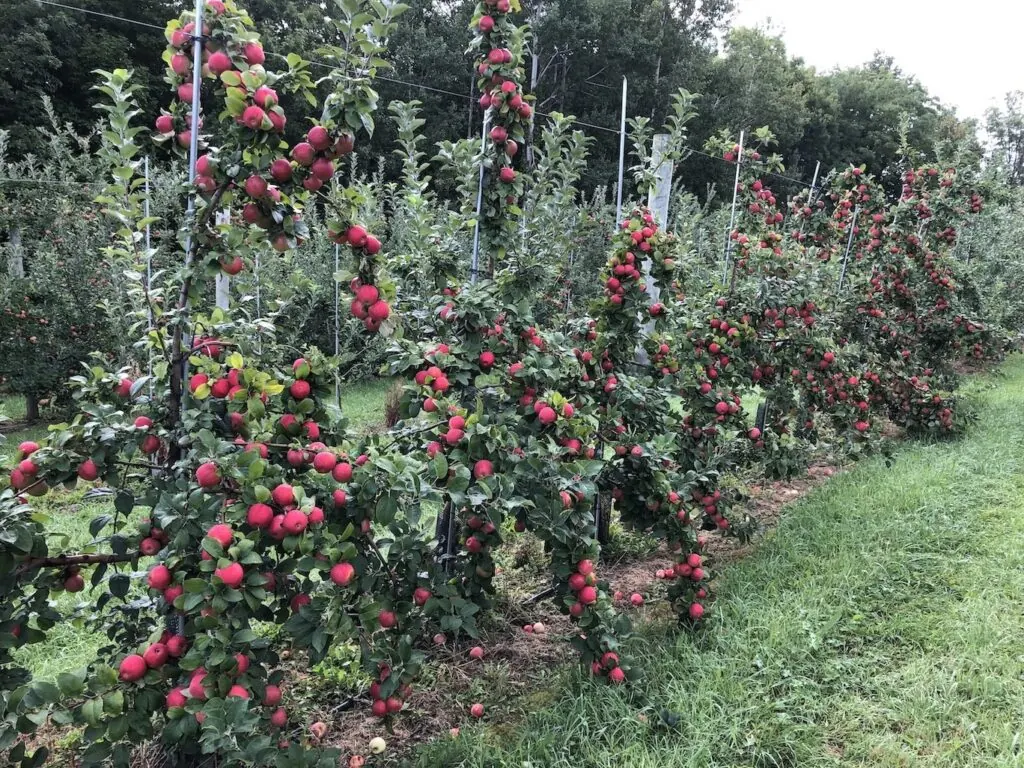
East Bloomfield is where the Northern Spy apple began, from a seedling orchard planted on Boughton Road in 1800, and the town has kept its farm character ever since. Two villages share this ground: East Bloomfield village in the center of town, and Bloomfield village to the west on Routes 5 and 20, where Route 64 turns north. Both sit among orchards, Mud Creek, and the farm roads of Ontario County.
East Bloomfield and Bloomfield
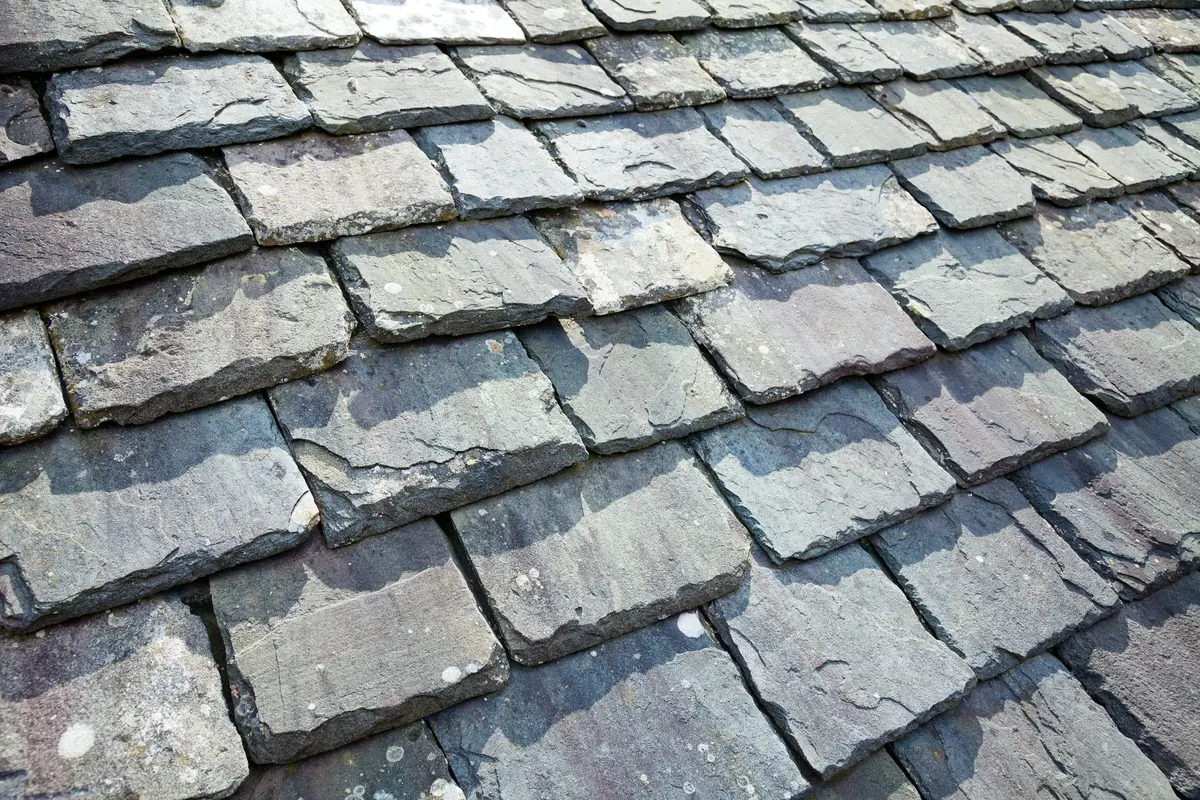
Deacon John Adams settled the Bloomfield tract in 1789 with a party of 24, and by 1790 sixty-five people lived here. Mud Creek powered the first mills: two flour mills, two sawmills, and a distillery stood on the creek by 1795, and the town grew three clock factories, two gun shops, and seven distilleries in the early nineteenth century. A slate roof on one of the old village homes needs hands that know the stone, since the flashing gives out long before the tiles do.
The Northern Spy apple began here in 1800, and the orchards still shape the town. Apple trees shade the farmhouse roofs around the villages, and the shade grows moss on north slopes while the orchard leaves fill gutters every autumn. The roof maintenance we do here starts with the moss and the gutters, then moves on to the flashing at the chimneys and valleys.
The first Congregational church west of Clinton, in Oneida County, was built here in 1801, and the village park came from land set aside by Benjamin Keyes. Bloomfield village sits west on Routes 5 and 20, where the highway meets Route 64, and East Bloomfield village sits a short drive east in the center of town. The New York State historic records list the churches and mills that shaped these streets, and the houses still show that history in their rooflines.
Autumn check
Orchard leaves and autumn rain wear on a roof before winter arrives. Walk through these five checks from the ground and the attic while the leaves are still falling.
Villages and roads
Two villages share this town, and Mud Creek runs between them. Most of our calls here come from the two villages and the orchard roads that run between them.
The village in the center of town, with the park, the old churches, and homes whose roofs date to the mill era.
The village west on Routes 5 and 20, where the highway meets Route 64 and the storefronts carry steep pitches.
Homes along Mud Creek, where mill history and damp air keep the shaded slopes wet and the eaves icy.
The road where the Northern Spy apple began, with orchard farmhouses that take shade and leaves all autumn.
Homes along the highway between the two villages, where traffic runs and the roofs carry the valley snow.
The road past the old mill sites on Mud Creek, where farmhouse roofs face open fields and long winters.
Local trouble
East Bloomfield roofs
Apple trees shade the farmhouse roofs around the villages, and moss grows on the north slopes where the sun never reaches. The growth lifts shingle edges and holds water against the roof, so an autumn walk finds the wear before winter locks it in.
East Bloomfield roofs
Air off Mud Creek stays damp, and the shaded slopes stay wet for days after rain, while the eaves beside the creek ice up thick in winter.
East Bloomfield roofs
Between the two villages, the farm fields let the wind run clear, and the windward slope loses ridge caps and tabs first. We start at the ridge after a storm, since that is where the wind shows itself.
Orchard leaves in the gutters, or a slate tile slipped on a mill-era home? Call and tell us which village the house sits in.
Call (585) 868-0065Coverage
East Bloomfield village carries the 14443 ZIP, and Bloomfield village carries 14469. Together they cover both villages, Mud Creek, and the orchard roads between them.
The 14443 ZIP covers East Bloomfield village, and 14469 covers Bloomfield village in Ontario County.
Country roads
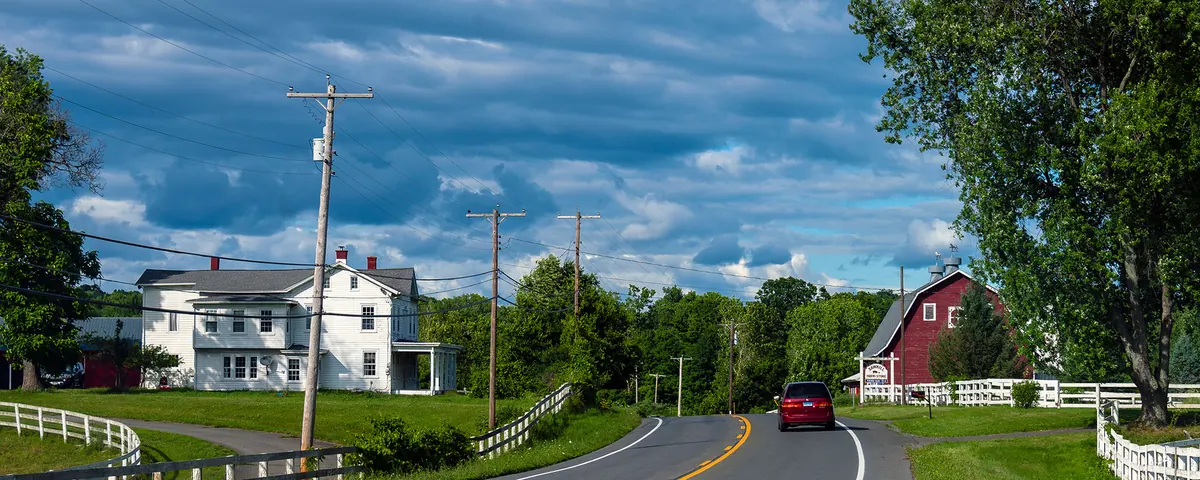
The country roads out of the two villages pass white farmhouses and red barns set back from the road, and the roofs on them are older, steeper, and shaded by the trees that line the drive. Mud Creek damp hangs over the low ground, and the shaded north slopes grow moss first.
The farmhouses carry tall brick chimneys as well, and the flashing where the chimney meets the slope is the joint that moves most with freeze and thaw. A look at the chimney and the shaded slope together covers the two places water gets in first.
Services
Mill-era slate gets new tiles matched by size and color, with flashing reset at chimneys and valleys that have shifted with the seasons.
Learn more →Orchard leaves in the gutters, moss on shaded slopes, and granule loss on sunny slopes, checked each year before winter locks them in.
Learn more →Orchard leaves pack the valleys, field wind lifts the ridge caps, and thaw cycles shift the chimney flashing, and each gets fixed where it started.
Learn more →A roof walk, an attic look, and a check along the creek-side eave, with a plain-words list of what to handle now and what can wait.
Learn more →Two villages share one creek, so send us a note saying which village the house stands in and where the orchard shade falls.
FAQ
The 14443 ZIP covers East Bloomfield village, in the center of the town, and the 14469 ZIP covers Bloomfield village to the west on Routes 5 and 20. The two villages sit a short drive apart, with Mud Creek and the orchard roads between them. We work in both villages and across the town, and the roof work is the same on either side of the line between them.
Yes, two ways. The trees shade the roofs, and moss grows on the north slopes where the sun never reaches. The leaves fill gutters and valleys every autumn, holding water against the shingles all winter. A limb that breaks off in a storm can crack shingles or punch through the deck. We clear the valleys and gutters, and check the slope beneath the trees for wear.
Usually yes. We match slate by size and color, and one slipped tile is a small repair when the flashing beneath it still holds. We look at the tiles around it and the flashing at the chimney and valleys, since decades of seasons work those joints loose, then set the new tile level. When the match is right, the repair blends in with the rest of the roof.
Damp air off Mud Creek keeps the shaded slopes wet for days after rain, and moss takes hold where the creek trees block the sun. Once the growth lifts the shingle edges, it holds more water against the roof. We clear the growth and check the flashing beneath it, then look at the attic vents, since damp air inside the house makes the outside problem worse.
Architectural shingles suit most farmhouses here, since they hold up under snow load and shed wind-driven rain well. Natural slate suits the oldest village homes, since it matches the original character and lasts a long time when cared for. The choice comes down to the pitch, the structure, and how much shade the orchard trees give the roof, so we walk the roof before naming a material.
Get up there in early spring, once the snow has left the roof but before the summer storms arrive. Look for ice-dam damage at the creek-side eave, lifted ridge caps from field wind, and moss on the shaded north slope. Walking the roof in spring catches all three while the fixes are still small, and it leaves the warm months open for the work itself.
Nearby towns
Victor sits north past the town line, Canandaigua lies east on Routes 5 and 20, West Bloomfield runs west toward the Bristol Hills, and Farmington sits north toward the Thruway.
Two villages, one orchard shade
Apple trees shade the roofs of East Bloomfield village and Bloomfield village alike, and that shade keeps the north slopes damp long enough for moss to take hold.
East Bloomfield is where the Northern Spy apple began, from a seedling orchard planted on Boughton Road, and the orchards still shape the town. Apple trees stand close to the farmhouses on the roads between the two villages, and their branches reach over the eaves. Shade from those branches keeps the north slopes cool through the day, and cool slopes stay damp after rain. Moss settles into that damp first, lifting shingle edges a little more each season, and dark streaks follow on the slopes that never see full sun.
Bloomfield village, to the west on Routes 5 and 20 where Route 64 turns north, takes the same shade in a different setting. Its storefronts and village houses stand close together, and the trees along the street shade the roofs between the buildings. East Bloomfield village, in the center of town, sits among the park and the old churches, and its houses take shade from the orchard trees on the roads that run out to the farms. Both villages share the orchard problem, yet each shows it in its own streets.
Autumn adds leaves to the shade problem. Orchard leaves fall onto the roofs and wash into the gutters and valleys, and a valley packed with leaves holds water against the metal beneath it all winter. Clearing the valleys and the gutter line after the leaves finish falling is the autumn job that matters most here, and it matters in both villages at the same time. A roof that enters winter with its valleys clear sheds meltwater cleanly, while a roof with packed valleys holds that water against the flashing until spring.
Orchard trees on the roads out of the village shade the north slopes of the houses near the park and the old churches, and moss follows the damp there first.
Street trees and close-set houses in Bloomfield village shade the roofs between the storefronts, and the shaded slopes there stay wet into the afternoon.
Creek and low ground
Mud Creek runs between the two villages, and the low ground beside it stays damp after rain, so the roofs on that ground wear at the chimney and the valley first.
Mud Creek powered the first mills here, with flour mills, sawmills, and a distillery standing on its banks in the early years, and the creek still shapes the town. The low ground beside it holds damp air in the morning, and the houses on that ground take the damp on their shaded slopes. Their chimneys work hard in that air, since the mortar joints loosen a little more with each thaw cycle, and their valleys collect leaves washed down from the creek-side trees.
The farmhouses on the country roads between the villages sit on slightly higher ground, yet they take the creek damp too, since the wind carries it up from the low ground. Their roofs show the same pattern: moss on the north slope, leaves in the valley, and flashing at the chimney that needs watching. A check on a creek-side house starts at the valley and the chimney, since those two joints show the damp first, and a check on a farmhouse road starts at the north slope, since the shade there holds the damp longest.
The first Congregational church west of Clinton was built here in 1801, and the village park came from land set aside by Benjamin Keyes, and the houses around those landmarks carry the same creek damp as the rest of the town. Their steep pitches shed snow well, which helps in winter, yet their tall chimneys and old valleys still need the same autumn attention. A slate roof on one of the old village homes needs hands that know the stone, since the flashing gives out long before the tiles do, and the creek damp works at that flashing year round.
Orchard and creek-side leaves wash into the valleys and hold water against the metal beneath them through the cold months.
Green growth on the north slope shows that orchard shade and creek damp are keeping the shingles wet after rain.
Thaw cycles loosen the mortar where the chimney meets the roof, and the attic boards beside the stack show the leak first.
Village roofs, side by side
Bloomfield village storefronts carry steep pitches over close-set buildings, while East Bloomfield village homes carry the same pitches over wider lots, and the two need different checks.
Bloomfield village sits west on Routes 5 and 20, where the highway meets Route 64, and its storefronts stand close to the street with steep pitches above them. Those pitches shed snow onto the sidewalk and the street, and the gutters above the storefronts take the meltwater from both slopes at once. A storefront roof check looks at the gutter line first, since a gutter that overflows there soaks the wall below, and at the valley where two storefront roofs meet, since that valley collects the leaves and grit from the street trees.
East Bloomfield village sits a short drive east in the center of town, and its homes stand on wider lots with more tree cover. Their roofs take more orchard shade and more leaves, yet they take less street grit, and their gutters fill with orchard leaves rather than street debris. A check there looks at the north slope for moss, the valleys for packed leaves, and the ridge for caps lifted by the wind that crosses the open ground between the villages.
Both villages share the same autumn rhythm. The leaves fall, the gutters fill, the valleys pack, and the first snow arrives on a roof that is either clear or clogged. The village that enters winter clear sheds its meltwater cleanly, and the village that enters winter clogged holds that water against its flashing until spring. Our roof maintenance visits cover both villages in the same autumn round, and our slate, tile, and specialty roofing visits cover the old slate on the village homes that still carry it. The two villages are one town, and their roofs are best read together, creek between them and orchards around them both.
| Village | Roof setting | What fills the gutters | What to watch first |
|---|---|---|---|
| Bloomfield village | Close-set storefronts on Routes 5 and 20 | Street leaves and grit | Gutter line above the storefronts |
| East Bloomfield village | Homes on wider lots near the park | Orchard leaves | Moss on the north slope |
| Mud Creek side | Low ground beside the creek | Creek-side leaves | Chimney flashing and valleys |
Mud Creek damp, orchard shade, and open-field wind each leave a different mark, so a roof in East Bloomfield village ages differently from one in Bloomfield village or out on an orchard road. The email button below is the quickest way to reach us: say which village yours stands in and what you have noticed.
Roofing Rochester, 75 S Clinton Ave Ste 510, Rochester, NY 14604, (585) 868-0065