Main Street Village center roofs
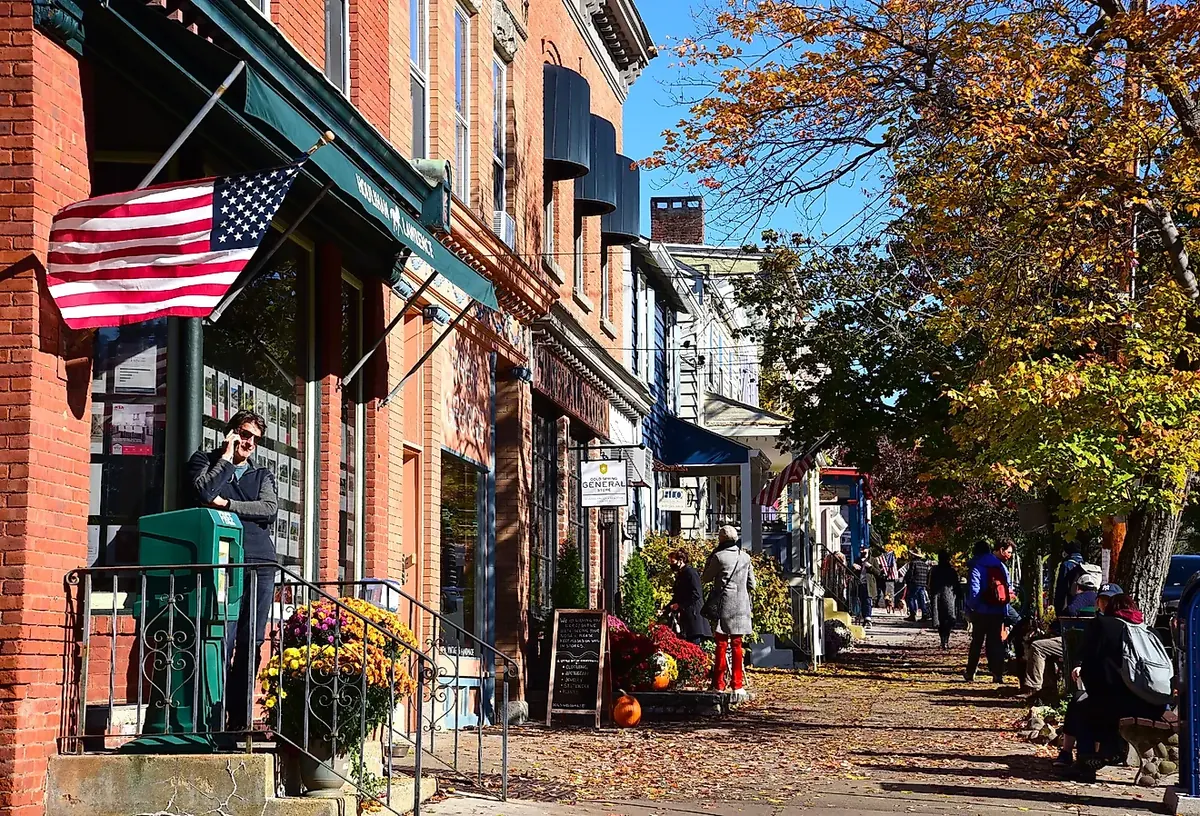
The village main drag, where the first store opened in 1814 and the storefronts still carry steep pitched roofs.
Oatka Creek Village
Scottsville took its name from Isaac Scott, who bought about 150 acres here in 1790 and built his log house at Main and Rochester Streets. The village grew rich on wheat, flour, and gypsum shipped down the Genesee Valley Canal, and its Rochester Street Historic District still holds the rooflines of that prosperous era: steep pitches, slate, and tall chimneys.
Scottsville and Wheatland
Oatka Creek powered the first mills here, and the Genesee Valley Canal carried the flour and gypsum away from 1840 onward. The mills made Scottsville prosperous, and the houses from that era carry the proof: slate on steep pitches, decorative gables, and chimneys built to last. A slate and specialty roof on one of these homes needs hands that know how the old tiles sit, since a slate roof fails at the flashing long before the stone gives out.
The village incorporated in 1914, long after its prosperous decades, and the Rochester Street Historic District keeps the streetscape of that time. The houses there sit close to Oatka Creek, and the creek air keeps the shaded slopes damp. Moss grows where the sun never reaches, and the roof maintenance we do on the district starts with the moss, then goes on to the flashing at the chimneys and valleys.
Wheatland spreads out around the village into farm country, with the hamlets of Mumford and Garbutt and the wide fields along the Genesee River. Farmhouse roofs out there take open wind and deep snow, and the barns beside them need their own look. The New York State historic register lists the Rochester Street district, and the village keeps its mill history close in the streetscape itself.
Historic district
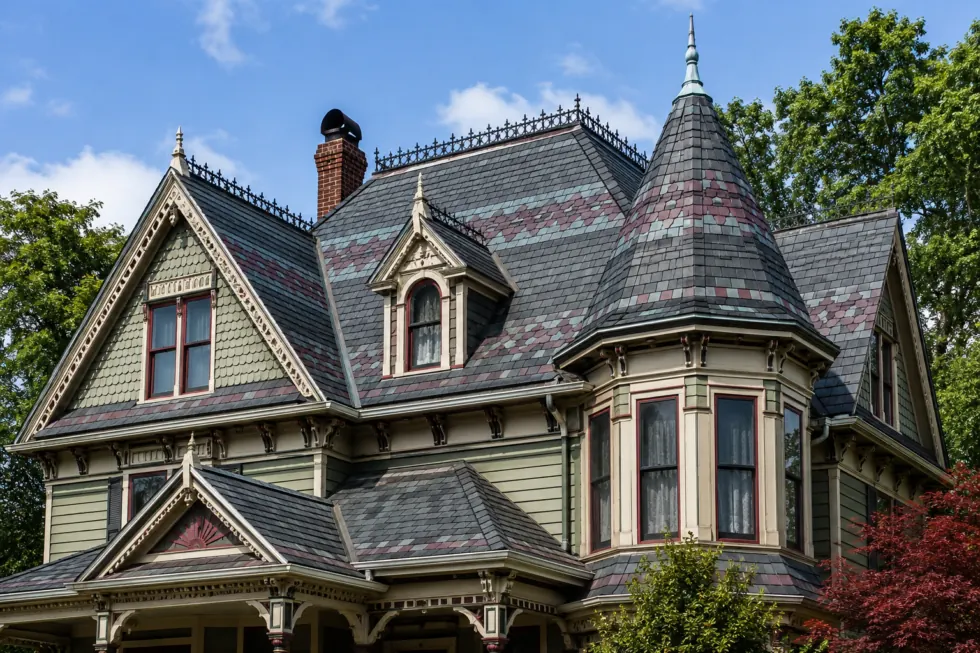
Rochester Street holds the best-preserved run of nineteenth-century homes in the village, and the roofs there tell the story of the wheat years. Steep pitches shed the snow that piles up off the Genesee River, slate tiles carry the decorative patterns of the era, and the gables face the street the way they did when the canal boats passed. A roof on this street is part of the streetscape, so a repair has to match the house rather than just cover the hole.
The creek runs close behind many of these homes, and the damp air from Oatka Creek keeps the north slopes wet for days after rain. That damp is what wears a historic roof fastest: it softens the mortar at the chimney, lifts the edges of aging shingles, and lets moss take hold under the eaves. The check on a Rochester Street roof starts at the creek side and works toward the street.
Village and town
The village is small, but the town of Wheatland around it holds farm hamlets and river ground. The village and the Wheatland hamlets around it are where most of our Scottsville work comes from.
The village main drag, where the first store opened in 1814 and the storefronts still carry steep pitched roofs.
The historic district street, with nineteenth-century homes, slate roofs, and decorative gables.
Homes along the creek, where damp air and shade grow moss on north slopes and ice lingers at the eave.
The Wheatland hamlet south of the village, with farmhouses that take open wind and deep snow.
The small hamlet in the town, where farmhouse roofs and barn roofs sit side by side.
Homes along the west bank of the Genesee River, where river damp and open wind shape the roof work.
House eras
The era of the house tells us where to look first. Canal-era slate, mid-century shingles, and new builds fail in different places.
| House era | Typical roof | What wears first | What we watch |
|---|---|---|---|
| Canal era, 1830 to 1870 | Slate on steep pitches | Flashing at chimneys and valleys | Slipped tiles after thaw cycles |
| Mill town, 1870 to 1910 | Slate and wood shingles | Valley flashing and ridge caps | Mortar joints at tall chimneys |
| Mid-century, 1940 to 1970 | Asphalt shingles | Pipe boots and ridge caps | Granule loss on the south slope |
| New builds | Architectural shingles | Nail pops and ridge vents | Drift lines after river snow |
A slate tile slipped on Rochester Street, or snow blown into the attic? Call and tell us which era the house comes from.
Call (585) 868-0065Coverage
Scottsville carries one ZIP, 14546, and it covers the village, the Wheatland hamlets, and the farm roads along Oatka Creek and the Genesee River.
The 14546 ZIP covers Scottsville village and the Town of Wheatland in Monroe County.
The village sign
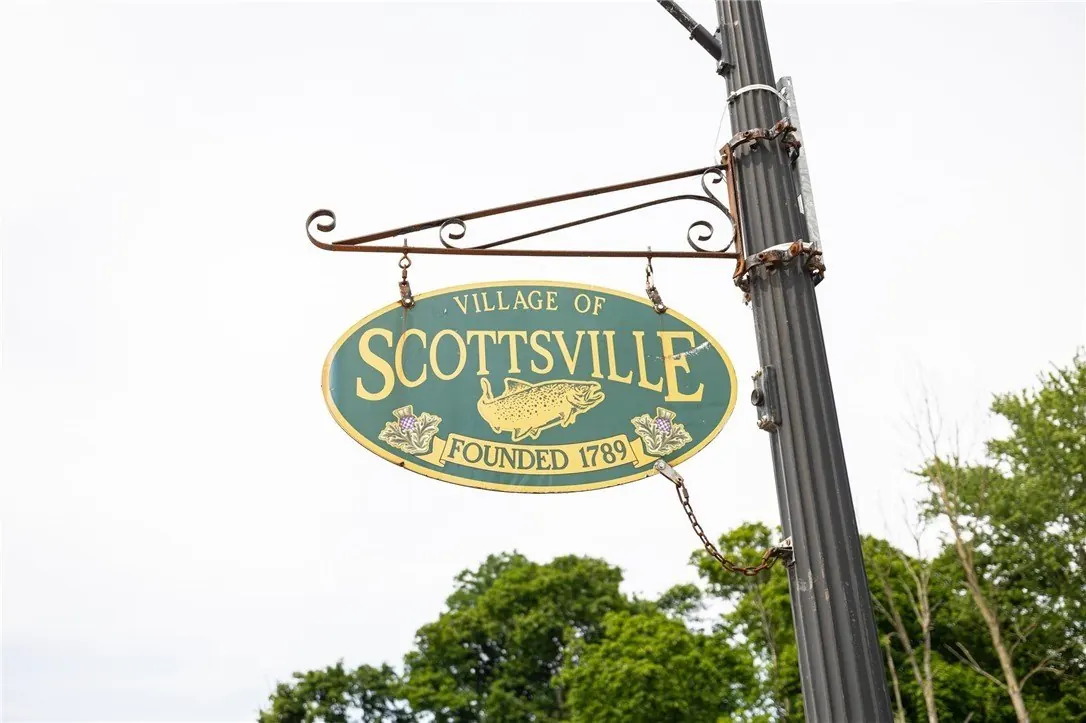
The village sign on the main road carries a trout and the year 1789, and the houses from the wheat years still stand behind it: slate on steep pitches, decorative gables, and chimneys built to last. Oatka Creek powered the mills that paid for those roofs, and the creek damp still hangs over the low streets.
The slate on those old houses can stay when the tiles and the flashing beneath them are sound, and a slate job here is a repair of the flashing and the broken tiles, not a new roof. A look at the chimney joint and the valleys tells whether the slate has years left in it.
Services
On historic district slate, tiles get matched by size and color, and we reset the flashing at chimneys and valleys that have moved with the seasons.
Learn more →Rochester Street slate slips, the valleys pack with creek leaves, and thaw cycles shift the chimney flashing. We fix each one at the joint where it started.
Learn more →Moss on creek-side slopes, granule loss on sunny slopes, and gutters full of leaves, checked each year before winter locks them in.
Learn more →Snow blown into the attic means air is moving where it should not, so we check the vents, the baffles, and the insulation at the eave.
Learn more →Oatka Creek damp creeps up one slope at a time, so write us naming the street and the side that shows it first.
FAQ
Snow blows in through gaps at the eave and the ridge when wind runs across the fields, and it settles on the insulation. The gaps sit where the soffit vents meet the roof deck, or where the ridge vent has lifted. We check the eave and the ridge from the attic, seal the gaps, and look at the baffles, since blocked baffles let snow pile up instead of melting.
Usually yes. A slipped slate tile can be matched by size and color, and it is a small repair when the flashing beneath it still holds. We check the tiles around it and the flashing at the chimney and valleys, since decades of seasons work those joints loose, then set the new tile level. With the right match, the repair blends in with the rest of the roof.
Yes, mostly on the shaded north slopes near the water. Damp air from the creek keeps shingles wet for days after rain, and moss takes hold where the sun never reaches. Moss lifts the shingle edges and holds more water against the roof. We clear the growth, check the flashing beneath it, and look at the attic vents, since damp air inside the house makes the outside problem worse.
Open wind lifts ridge caps and tabs on the windward slope, and deep snow piles against one side while the other stays bare. The barns beside the house face the same weather, with metal panels loosening at the fasteners and low slopes holding water at the eaves. We look at the house and the barn on the same visit, since the storm that hit one hit both.
Look for tabs curling across two or more slopes, granules washing out of the gutters after every storm, and a deck that feels soft underfoot. Slate roofs show it differently: tiles slipping in several places and flashing that has opened at the chimney. A single slope of trouble means a repair, while trouble across the whole roof points to replacement. We walk it and point at what we see.
We do. Mumford and Garbutt sit in the Town of Wheatland around Scottsville, and their farmhouse roofs face the same open wind and river snow. The houses there often carry a barn beside them, and the barn roof gets its look on the same visit. The work is the same as in the village, but the wind runs harder across the open fields.
Nearby towns
West past the town line sits Caledonia, Avon lies south along the river, Rush runs east toward Henrietta, and Chili sits north toward the city.
Mill town country
Scottsville grew up as a mill town on Oatka Creek near the Genesee River, and the roofs in the village still carry the shapes of the wheat years, with steep pitches, tall chimneys, and slate on the oldest streets.
Oatka Creek runs through the village to the Genesee River, and the houses along its banks sit in damp air that lingers after rain. Shaded slopes on the creek side stay wet for days after rain, and moss finds its footing where the trees shut out the sun. A creek-side slope wants its shaded planes watched, and the valleys cleared where the creek trees drop their leaves each fall.
Rochester Street runs through the village as the main street, and the brick storefronts and the older homes along it carry the steep pitches and the slate roofs of the mill era. Slate lasts for generations when it is looked after, and the flashing around a slate chimney moves with the freeze and thaw until the seal opens. A slate roof wants its flashing checked on the same visit as the roof, and the slipped slates found before the next storm finds them. The slate and specialty roofing page covers what that check looks for.
The town of Wheatland spreads around the village with fields, farmhouses, and the hamlet of Mumford to the south, and the roofs out there take the open-field wind with nothing to break it. The farmhouses carry long ridges and wide valleys, and the barns beside them carry low slopes that hold the snow deep. A farmhouse roof wants its ridge caps looked at after the first hard storm moves through, and the barn roof watched where the snow sits longest.
The wheat years left the village with a mix of ages on every street, so a mill-era house can stand beside a mid-century ranch and a newer home, and each one wears in its own place. The old house leaks at the chimney, the ranch wears at the ridge, and the newer home packs its valleys with leaves, and the visit that reads the street gets the order of the checks right.
North of the village, Scottsville Road runs toward the city, and the houses along it sit on the rise above the river flats. The roofs there take the wind off the river with the fields behind them, and the lots open out enough for the snow to pile deep against the windward slope. A roof on that rise wants its ridge caps checked after the first hard storm and its valleys cleared where the roadside trees drop their leaves.
Two Scottsville roofs
The farmhouse out in Wheatland and the village house on Rochester Street share the same creek damp, and they share the same winters, but the wear shows up in different places.
Long ridges, wide valleys, and open ground mark the farmhouses on the town roads, with barns beside them that carry low slopes and deep snow. Open-field wind works the ridge caps and the rake edges, lake snow drifts deep against the windward slope, and the young trees shed leaves into valleys that run long. A farmhouse roof wants the ridge and the valleys checked first, and the barn roof looked at while the roofer is already on the property.
Steep pitches, tall chimneys, and slate on the oldest streets mark the village houses near the creek. The chimney flashing moves with each freeze and thaw, the slate slips a little each year where the nails have rusted, and the creek damp keeps the shaded slopes wet long after rain. A village roof wants the chimney and the slate checked first, and the shaded slope watched for moss.
What to watch
The age of the house decides the first check in Scottsville, so a wheat-era home, a mid-century ranch, and a newer house each wear down in their own way.
| House era | Roof shape | First weak point | What to watch |
|---|---|---|---|
| Wheat-era homes on the village streets | Steep pitches, slate, tall chimneys | Chimney flashing and slipped slates | Stains below the chimney and slates that have slid out of line |
| Mid-century ranches and Capes | Low slopes, broad and plain | Ridge caps baked dry by summer sun | Granules wash to the downspouts, and the shingle edges curl at the eave |
| Newer homes in Wheatland | Long ridges, wide valleys, dormers | Valley metal clogged with leaves off young trees | Damp lines under the valley, and leaves matted in the seam after fall |
The era of the house points to the first check, and it never tells the whole story. A wheat-era roof with new flashing can outlast a newer roof with a packed valley, and a ranch with open soffits can outlast a colonial with a blocked ridge vent. The visit that walks the roof and looks in the attic reads the roof that stands there today, not the year the house was built. The roof inspection page explains what that walk and the attic look cover.
Slate from the mill years, creek damp on Rochester Street, and open wind out in the Wheatland fields give Scottsville roofs three different kinds of wear. Write to us with your street and the trouble spot, and we will read the roof with that history in mind.
Roofing Rochester, 75 S Clinton Ave Ste 510, Rochester, NY 14604, (585) 868-0065